Tuesday, November 10, 2009

An Imaginary Conversation

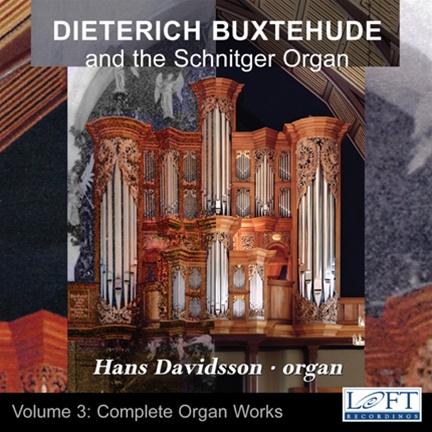
Today we thought we would share an article written by organist Hans Davidsson entitled "An Imaginary Conversation between Buxtehude and Schitger." As you should know Hans Davidson has been working on the Complete Organ Works of Buxtehude, and Volume 3 was recently released. Research has found that BBuxtehude's visit with Arp Schnitger in Hamburg in 1687 began an association that lasted for many years and resulted in the building of the four-manual organ at the Cathedral in Lùbeck, as well as modifications to the organ at Saint Marien. Hans Davidsson explores the encounter between Buxtehude and Schnitger using the four-manual organ in Gothenburg, Sweden in this final volume of the complete works of Buxtehude.

An Imaginary Conversation between Buxtehude and Schnitger during the 1687 visit to Hamburg


Dieterich Buxtehude and Arp Schnitger:


The Visit to Hamburg in 1687


“Yes, after I meet with the church council next week you will be informed of when you can expect an invitation. I know you are very busy in the months to come, but I look forward to seeing you in Lübeck as soon as time and God allows! We have much to accomplish and to discuss, yes?”

The bright voice of the lively, middle-aged man turned to laughter. He energetically shook the hand of his somewhat taller and younger friend, entered the coach, turned around, waving and smiling warmly as he took his seat next to an elderly lady.

“So, you have visited with our young master organbuilder Arp Schnitger”, she said, not without curiosity, as she attempted to give some more space to her fellow passenger, who was attempting to maneuver a viola da gamba case between them.

“My name is Frau Schmidt, and I am the wife of one of the church elders at St. Nichola’s, the congregation where Mr. Schnitger has been building for the last five years. It will be the largest organ that ever was built in our city, perhaps even in the world! Did you see the magnificent façade? Did you hear some of the completed voices? I gather you’re a musician?”

“Indeed, I am,” he said with another laugh and another futile attempt to make the gamba take up less room in the cramped coach. “My name is Dieterich Buxtehude. I am Organist and Werkmeister in St. Marien in Lübeck, and indeed you are right, the new organ with its four manuals and pedal and sixty-seven stops is the largest organ in anywhere in Christendom.”

Suddenly, the coach started to move, and Mr. Buxtehude looked out through the window and waved a final farewell to his host.

“Well, I am glad that you did not bring the whole organ with you,” said Frau Schmidt, now beginning to chuckle herself.

As they traveled along the Gänsemarkt and northwest out of the city, Dieterich Buxtehude started to gather his thoughts. Since he left Lübeck last Monday, he had found much time to think, and he had learned even more in his four days in Hamburg. “The visit had been most valuable, and indeed inspiring. Not only stimulating visits to instruments, but pleasant music making at the home of my old friend and musical brother, Jan Adam Reincken with some of his other friends, and, of course, good food and fine French wine!”

Buxtehude had been relieved that the church council in Lübeck sent him to visit before the St. Nichola’s organ was finished. “You learn so much about the organ builder, his craft, philosophy, the quality of his business and his workers when you see the installation in progress,” he said almost to himself. “And most of the flue stops and some reeds were already playable.”

The new organ was clearly going to be a masterpiece. Mr. Schnitger had developed the concept brilliantly, and he and his team were completely capable of building this enormous instrument. Buxtehude was convinced that Hamburg and northern Germany had not seen an organbuilder of this potential and caliber since the days of Gottfried Fritzsche, or perhaps Friedrich Stellwagen from Lübeck, who built the two marvelous organs in his own church, and worked on all the other organs in the city too. In fact, it was his late teacher Scheidemann who had brought Stellwagen to Hamburg to carry out the large rebuilding of the organ in St. Katharinen in the 1640s. “How much I enjoyed playing this beautiful organ during my apprentice years in Hamburg!” he smiled to himself, “and dreamed of once becoming the organist of a great instrument brought to life by this master. Well, for twenty years, I have had the good fortunate to play two of them!” Frau Schmidt, seeing her companion beginning to mumble asked a pointed question of her companion: “Herr Buxtehude, if your instruments are so grand, why are you considering a new organ? I follow music keenly, you will not lose me and we have much time before us.”

Buxtehude brightened and began to speak animatedly to his travelling companion. “At the time when I arrived in Lübeck, almost twenty years ago, the large organ in St Jacobi was substantially renovated by Joachim Richborn but since then nothing has been done. Now it is absolutely necessary to do something about the organs in Lübeck, not only in St Marien, but in several churches, and the Dom needed a new organ. And this time it my responsibility to see to it that the famous instruments of Lübeck will be revived and renewed by the best builder of our time. Mr. Schnitger already has an indisputable reputation as a very capable and gifted builder, as you well know. His instrument in Stade is already almost fifteen years old. He has substantial experience. The impression of the last three days of your new organ at St. Nicholas, and my time with the builder himself has convinced me that Arp Schnitger is the man for the organs in our city. I have made up my mind. I will bring him to Lübeck for a longer visit to examine and study all the organs of our city, and we will develop a plan that could be pursued with the representatives of the church and city councils.”

His entrepreneurial soul shivered with excitement. He sensed an unusual opportunity. However, also a considerable challenge... They needed a vision and a joint collaborative effort of a unique kind that had most likely not been undertaken in a long time.

“Would you like a piece of chocolate,” Frau Schmidt said awaking him from his second lapse into silence.

“Yes, thank you very much,” Buxtehude said with a gentle smile. And, as the conversation unfolded, his mind started to develop the scope and strategy for a long-term plan, an organ initiative that would again equip his city with well-working state-of the-art instruments.
—Hans Davidsson


http://gothic-catalog.com

Monday, November 9, 2009

Dieterich Buxtehude and the Schnitger Organ


DIETERICH BUXTEHUDE AND THE SCHNITGER ORGAN


(Complete Organ Works Volume III)
Hans Davidsson, organ
3 CD Set
LRCD-1094-96

Loft Recordings Announces the Final Volume of the Complete Organ Works of Buxtehude


This 3-CD set is the third installment in a series that has received such critical praise as “Audiophile Best Find of the year” (Bob McQuiston), “essential listening for anyone interested in early organ music” (New Classics/UK) and “outstanding from every point of view” (American Record Guide). The Organ magazine (UK) gave the first two volumes their “Star” award with this statement: “These CDs are most highly recommended, and have to be a star recording of star recordings…they are an absolute must to buy.”

This final volume of Loft Recordings’ Buxtehude Complete Organ Works, explores the relationship between Buxtehude and the 17th century organbuilder Arp Schnitger (1648-1719), whose instruments have become a global archetype of the German Baroque organ. Newly discovered information about Buxtehude indicates that he only had organs tuned in mean-tone temperament at his disposal----this set is the only available recorded on an instrument tuned in pure quarter-comma mean-tone, which has many delightful and colorful consequences which are uniquely heard here. (The full 7-disc set will released as a single SKU next year)

Schnitger built and rebuilt approximately 170 organs during his lifetime, managed workshops in several locations—including Hamburg, Bremen, Groningen, and temporarily Lübeck. In the twentieth century, Schnitger’s organ building was probably the most influential, as many new instruments in Europe, North America and Asia were inspired by his style of building.

In 2000, a ten-year project in Göteborg, Sweden culminated with the inauguration of new large city organ based on new research into Schnitger’s organ building methods. The façade of this instrument is a reconstruction of the façade that Arp Schnitger built in the Lübeck Cathedral, completed in 1699.

Hans Davidsson received his Soloist Diploma from the Conservatory of Göteborg, Sweden. A special interest in early music led to three years study with Jacques van Oortmerssen at the Sweelinck Conservatorium in Amsterdam and post-graduate research on North German Baroque organ music focused on Matthias Weckmann for the University of Göteborg.

From 1995-2000, he was the director of the Göteborg Organ Art Center, GOArt, and he is currently its General Artistic and Research Director as well as the Artistic Director of the Göteborg International Organ Academy. In 2001, he was appointed Professor of organ at the Eastman School Music, Rochester, NY, USA, and Project Director of the Eastman Rochester Organ Initiative (EROI).

To purchase this album along with the other two critically acclaimed albums in the Complete Organ Works of Buxtehude set, please click HERE.


Friday, November 6, 2009

Behind Dominick Argento's Evensong


Argento's 'Evensong' honored National Cathedral, but more important, it eased his grief

By Rob Hubbard
Updated: 09/24/2009 04:55:23 PM CDT
Dominick Argento sits in on a rehearsal of his "Evensong: Of Love and Angels." (Pioneer Press: Scott Takushi)

Bethesda.

The word greeted composer Dominick Argento every day as he entered the hospital. It loomed from above the door as he went to visit his wife, reminding him of the biblical tale of the fountain of Bethesda, in which it was said that an angel would trouble the waters and the first to step into the fountain afterward would be healed.

Such miracles were on Argento's mind because his wife, Carolyn Bailey Argento, had been suffering through a long, painful illness. For more than 50 years, the soprano had been the muse and partner of one of America's most prominent composers, best known for operas and song cycles that have won the Pulitzer Prize and a Grammy. They shared a life at the center of the Twin Cities' growth as an artistic capital.

Now, Argento felt his composing career was over. Until, on one visit to the intensive care unit at Minneapolis' Bethesda Rehabilitation Hospital, his wife helped change his mind.

"I told her that the National Cathedral of Washington wanted to commission me to write a work for its 100th anniversary," Argento said last week from his home in Minneapolis. "I wasn't interested in writing anything, least of all a nice big religious celebratory piece for the cathedral's 100th anniversary. But my wife said, 'Well, I wish you would do it.'

"Her father was a Methodist minister in Baltimore. She recalled being taken to the National Cathedral as a young girl and said that it was a day she never forgot. So she was thrilled to hear that they had picked me to write a 100th anniversary piece. She said, 'Please write it.' I said, 'I don't feel like writing that kind of a piece.' And we sort of ended the argument.

"Then, one day, I came in and said, 'Listen, I've been thinking about it. When you get better, when you get home, I'll start working on the piece, if there's still time.' And that was our agreement. But she never got better."

After Carolyn Bailey Argento's death in February 2006, the National Cathedral Choral Society's music director, J. Reilly Lewis, again contacted Argento.

"He said, 'What about writing a piece in honor of your wife? In her memory.' And the more I thought about it, I thought that I'd be fulfilling that commission and honoring my wife's request."

The result was a work called "Evensong: Of Love and Angels." It premiered last year at the National Cathedral and will receive its second performance tonight at Minneapolis' Central Lutheran Church, where Philip Brunelle will lead the choruses and orchestra of VocalEssence. Argento said that he had the work in mind for VocalEssence all along.

"Philip Brunelle was at the premiere in Washington with me," Argento said. "And we were already talking about this performance. The one in Washington was wonderful, but everybody involved in it was a stranger. I didn't know the conductor, the soloists, anyone in the chorus, and I didn't know anyone at the cathedral. They had taken the work to their hearts and really gave it a wonderful performance. But this one is different in that this is almost something between friends.

"Philip and I and Carolyn, my wife, have been friends for almost 50 years. And my wife was very fond of Maria Jette's singing. I think that she would be thrilled to know that Maria was doing the big soprano part. Both Carolyn and I knew a lot of the people in the VocalEssence chorus and a lot of people who are going to be in the orchestra. So it's so different here in that this is a kind of memorial being done by a group of friends."

"Evensong" became an even more deeply personal work for Argento, because he wrote most of the text himself.

"At first, I wanted to use the last lines of Thornton Wilder's novel, 'The Bridge of San Luis Rey': 'There is a land of the living and a land of the dead and the bridge is love, the only survival, the only meaning.' But I couldn't get permission (from Wilder's estate)."

However, Wilder still had an influence. His short play about the fountain at Bethesda and the angel that troubled the waters inspired Argento.

"The subtitle is 'Of Love and Angels,' " Argento said. "And the reason for the angels is that my wife's favorite icon all through her life had been angels. If you were to look at our kitchen right now, you'd see that there's a wall plastered with angels of all kinds. She always bought them when we went on trips and gave them to friends as gifts."

Has the creation of "Evensong" been part of Argento's healing process?

"Oh, yes," he said. "She died the first week of February in 2006. The next month or two, I was debating whether or not to write this piece. And I spent the summer thinking about how I would do it, if I did it. By the time fall came, I was thinking: Our wedding anniversary was Sept. 6, so I would start the piece then, whether I was ready or not. It was harder to do than I thought it would be. But I kept going and completed it on Sept. 6 a year later. They would have been our 52nd and 53rd anniversaries."

Thursday, November 5, 2009

Hopeful Gospel Quartet

On our newest release of great Thanksgiving music, Over the River and Through the Woods we have spoken of Garrison Keillor and VocalEssence, but there is another ensemble involved in this holiday masterpiece - The Hopeful Gospel Quartet.

The Hopeful Gospel Quartet is:
Left to Right: Left to Right: Garrison Keillor, Linda Williams, Kate MacKenzie, and Robin Williams


The Hopeful Gospel Quartet

"The Hopeful Gospel Quartet began its career backstage at Prairie Home shows, when we stood waiting for the balloon to go up and sang to pass the time and found out that we all like gospel songs and that they sound wonderful in a stairwell. We each had other fish to fry - Kate was playing Sheila the Christian Jungle Girl in "The Adventures of Buster the Show Dog" - and Robin and Linda were carrying on their busy duet business and Mr. Keillor was, of course, The Prairie Home announcer, but sometimes these little things that you do while waiting for the balloon to go up turn out to be memorable. And perhaps that's how the Spirit works. Since those days, the Hopefuls have toured with Chet Atkins, performed at Carnegie Hall and Radio City and the Universal Amphitheatre and at the mammoth Prairie Home Hymn-Singing Festival in Moorhead, Minnesota. But at heart we are still a stairwell quartet, searching for the sound. Radio City had a great booming stairway, the Fox Theatre in St. Louis had a good one, and also the Flynn in Burlington, Vermont. Somewhere in backstage America, we feel, the Spirit had a stairway for us, with the exact perfect landing with the right plaster walls and just the right angles. When you sing in a great stairwell, it doesn't feel as if the music comes out of you as much as it comes through you, and that is the true gospel vision: to be an instrument. We're still looking, and we remain hopeful."
-The Hopeful Gospel Quartet

Garrison Keillor was born in 1942 in Anoka, Minnesota, and began his radio career as a freshman at the University of Minnesota, from which he graduated in 1966. He went to work for Minnesota Public Radio in 1969, and on July 6, 1974, he hosted the first broadcast of A Prairie Home Companion in St. Paul. (The show ended in 1987, resumed in 1989 in New York as The American Radio Company, returned to Minnesota, and in 1993 resumed the name A Prairie Home Companion.) It is now heard each week by more than two million listeners on more than 430 public radio stations. Keillor hosts a daily five-minute radio program, The Writer's Almanac, is a frequent contributor to Time and The Atlantic Monthly, and the author of ten books, including Lake Wobegon Days (1985), The Book of Guys (1993), and The Old Man Who Loved Cheese (1996). His newest book is Wobegon Boy (1997).

Keillor's recording of Lake Wobegon Days received a Grammy Award; he received two ACE Awards for cable television and a George Foster Peabody Award. In 1994, he was inducted into the Radio Hall of Fame at Chicago's Museum of Broadcast Communications. With Philip Brunelle, he has performed with many orchestras, including the Chicago, Milwaukee, San Francisco, Pittsburgh, Minnesota, Dallas, and National symphonies; he has appeared at Wolf Trap, Carnegie Hall, and other major concert halls as a member of The Hopeful Gospel Quartet; and he has performed on his own in one-man shows across the country and in tour broadcasts of A Prairie Home Companion.

Kate MacKenzie has been a favorite guest of A Prairie Home Companion since 1981. For many years, she was lead singer of Stoney Lonesome, with whom she recorded six bluegrass albums, toured Europe, Japan and North America, and was featured in the public television series Showcase and the Nashville Network's Fire on the Mountain. With the Hopeful Gospel Quartet, MacKenzie has recorded a live album from Carnegie Hall, performed at folk festivals in Scotland and Denmark, and was featured on PBS' Austin City Limits. The Hopeful Gospel Quartet's newest recording is Climbing Up on the Rough Side, on the HighBridge label. MacKenzie's work with A Prairie Home Companion has included co-host roles in several Prairie Home broadcasts, coast-to-coast tours, farewell and reunion shows, 20 Disney Channel television broadcasts, the 1993 Book of Guys tour, and a recurring dramatic role as Sheila, the Christian Jungle girl (wild, yet pure). MacKenzie's first solo album, Let Them Talk (Red House Records), received enthusiastic reviews and was on the National Bluegrass Charts for 10 months. A second solo album, Age of Innocence (Red House), was released last fall and earned MacKenzie a Grammy nomination for Best Bluegrass Album. MacKenzie's success was noted in The New York Times, which grouped her in "the new wave of strong female voices."

Robin and Linda Williams have been frequent guests on A Prairie Home Companion since 1976. They performed on the second and third Prairie Home Companion Reunion Tours and on A Prairie Home Companion's broadcasts from Carnegie Hall, Radio City Music Hall, and the Universal Amphitheater. Beyond A Prairie Home Companion, the Williamses have made numerous television appearances: on the Nashville Network's Fire on the Mountain, Nashville Now, and Music City Tonight. And the duo has been heard on other nationwide radio programs: the Grand Ole Opry has welcomed Robin and Linda Williams as guests, as have Mountain Stage and NPR's All Things Considered. With more than a dozen recordings and three musicals to their credit, they are considered to be among the finest songwriters in the folk-country tradition. Their most recent albums include: Sugar for Sugar, on the Sugar Hill label; and Robin and Linda Williams and Their Fine Group-Live, Sugar Hill's re-release of Strictly Country Records' recording, Live in Holland. A new album, Devil of a Dream (Sugar Hill), was released this year. The harmonies of Robin and Linda Williams can also be heard on Mary Chapin Carpenter's album, Stones in the Road, and on Iris DeMent's Warner Bros. recording, My Life. As part of the Hopeful Gospel Quartet, the duo recorded a live album from Carnegie Hall (produced by Chet Atkins, on Sony Records), toured across the United States and Europe, and been featured on PBS' Austin City Limits.

Wednesday, November 4, 2009

Over the River and Through the Woods Review - The Serious Comedy Site

This is a raving review from "The Serious Comedy Site" about our Thanksgiving Music release on Clarion Records, Over the River & Through the Woods featuring Garrison Keillor, VocalEssence, and the Hopeful Gospel Quartet! You can find the review in its original format by clicking HERE, or just read on.

Over the River & Through the Woods, a 2 CD set featuring the VocalEssence Ensemble Singers, the Hopeful Gospel Quartet, and Garrison Keillor, is perfect for those who prefer the music segments of A Prairie Home Companion. If you are a fan of hymns, gospel and traditional music there is a lot of joy to the ears in this 2004 VocalEssence records release. If you are wondering why this particular release is on a comedy site it is because I still absolutely love the later VocalEssence release Hymn to Potatoes and just wanted to hear more from this ensemble.

Personally, hymns and gospel are not my cup of tea but Over the River & Through the Woods is beautiful music. It is obvious while listening to this 2 CD set that VocalEssence and the Hopeful Gospel Quartet are not only great singers but that they sing with a joy that is contagious to the live audience and the listener. This is really what makes this recording work for me.

From what I know of this particular kind of music I know that the biggies of the genre are here: Morning Has Broken, sung by the audience, Rivers of Babylon (which I am only familiar with because of the Boney M version), Will the Circle Be Unbroken, and How Great Thou Art.

For fans of A Prairie Home Companion there is a News From Lake Wobegon story included here. My only reservation about this 2 CD set is Garrison Keillor sings a bit too often. When you have vocal ensembles as good as Vocal Essence and the Hopeful Gospel Quartet you should let them sing, especially if your own voice is not professional quality. This recording is, however, a tie-in to a Prairie Home Companion show so it was his show.

Tuesday, November 3, 2009

Hymn to Potatoes Review - Audiophile Audition

Today we thought we would share with you a grand review from Audiophile Audition Magazine of the Clarion Records release Hymn to Potatoes and Other Masterworks from "A Prairie Home Companion" featuring Garrison Keillor and VocalEssence. This review comes from audaud.com and was written by Ann Stahmer.


If you have never spent an enjoyable Saturday evening listening to Garrison Keillor spinning yarns about fanciful Lake Wobegon and its residents, let this CD be an introduction you’ll never forget. The selections are taken from the many appearances that VocalEssence has made on this much-loved public radio program.

Garrison Keillor is an enormously appealing storyteller and narrator, and this recording displays his considerable talents to the best advantage. His unassuming manner, masterful yet understated comedic timing, and ability to bring the audience along as involved participants have made him one of today’s most popular radio personalities. Those who have been lucky enough to attend one of his live shows (as part of his ongoing tours) will attest that it is just as funny in person.

The VocalEssence Ensemble Singers, conducted by Philip Brunelle, is one of the finest and most versatile choral groups in the country. Their artistic range extends from the earliest Renaissance motets to a John Lennon tune with visits to everywhere else in between. The voices of this ensemble are well tuned and beautiful - especially the sopranos, who have a bell-like quality in their upper ranges that makes the entire group that much sweeter to the ear. The other sections are just as good and provide listeners with an appealing sound that lets them appreciate the humor behind some of the material presented here without having to forgo good choral singing in the process.

There is an abundance of humor to enjoy on this disc. Garrison Keillor tells a story of how Franz Schubert was loved and supported by his friends while waiting for an audience to find his music, during which time they fed him his favorite food that inspired him to write his famous “Hymn to Potatoes” (unknown to me until I was enlightened by this tale.) Apparently, Schubert also composed a men’s piece about the joys of being without women entitled “Song of the Sons of Bernie” (sung to the tune of “Wiederspruch”). Listen carefully to the words and imagine a counterpart that might have been composed by women. For those of us who grew up as “choir nerds,” I highly recommend “Runaway Choir.” It will bring back memories and give you a healthy dose of nostalgia and memories of musical times gone by, as well as providing some great choral singing along the way in many different styles. My favorite selection on this disc was “Come With Me and Be My Love” by the popular British composer John Rutter. It reminded me of another Rutter song I have conducted, “It Was a Lover and His Lass.” This jazz-infused selection is very challenging; and VocalEssence truly did it justice. Another lovely performance on this disc is “I Denna Ljuva Sommartid,” arranged by Swedish composer and conductor Anders Öhrwall.

The 2-CD set provides lucky listeners with almost 100 minutes of pure pleasure from this clever combination of great singing and amusing stories that will warm your heart and please your ears. So, go to the VocalEssence website, and get it right away so you can start appreciating the great partnership that Philip Brunelle and Garrison Keillor have sustained for many years. Choral music enthusiasts as well as the national radio audiences have been the recipients of their great gifts. Music and humor have never been this much fun before, and may not be again until the next CD from these talented performers appears.

Tracklist, Disc 1: Song of the Sons of Bernie, A Word about Schubert (An die Musik, Hymn to Potatoes), Ave Maria, Dutch Calvinism: The T.U.L.I.P. Doctrine (Our Faithful God, We Gather Together, Doxology), Come Live with Me and Be My Love, Brahms in Love (Wiegenlied, Liebeslieder Walzer), Two Folk Songs (Y Bore Glas, I Denna Ljuva Sommartid, The “Shenandoah” Syndrome, Julia.

Tracklist, Disc 2: The Runaway Choir (Spring, the Sweet Spring, Sugar Sugar, Aquarius, Mandy, Bohemian Rhapsody,, Karma Chameleon, Copacabana, Sunshine on My Shoulders, Memory), Norwegian Independence (Kan Du Glemme Gamle Norge, Serenade, Landkjenning, Aftensolen), Holy Trinity Lutheran Seeks Music Director, Beulah Land, The Choral News from Lake Wobegon (Now Thank We All Our God, Sanctus, America the Beautiful, April Is in My Mistress’s Face, Hymn to the Trinity), Something, Spring Fever

- Ann Stahmer

Monday, November 2, 2009

Over The River and Through the Woods - Thanksgiving Music


As we kick off November, we thought we would share a radio program from American Public Media "We Gather Together" featuring Garrison Keillor and VocalEssence. Much of this music is found on our recent releases Hymn to Potatoes and Over the River & Through the Woods.

Here is the introduction for the program from the American Public Media website (Click HERE to see it on the APM website):

November 2006

Garrison Keillor weaves together familiar melodies and his own observations into this charming and unique celebration of Thanksgiving. Keillor is joined by Prudence Johnson, Rich Dworsky, the VocalEssence Chorus & Ensemble Singers, Charles Kemper and Philip Brunelle in musical renditions of traditional hymns and humorous adaptations of songs for the season. Keillor guides us through the hour with his renowned story telling ability and reminds us of the treasures of Thanksgiving with his remarkable perceptions of American life.

Program Highlights:
The masterful narration of Garrison Keillor ("First there were those pilgrims who landed on the rocky shores, and then landed on the Indians..." "We had much more fun with food when we were children and we were able to throw it.") is perfectly matched with the musicians in the special—all of whom have been featured on A Prairie Home Companion.

Musical Highlights:
The intimate duets of Garrison Keillor with Prudence Johnson; Garrison narrating Psalm 106 with the VocalEssence Chorus "I will praise the Lord, though I am seated in the waiting room of a Urologist"; the Chorus singing traditional hymns, such as "Now Thank We All Our God", as well as a medley of food songs for Thanksgiving including "A Hymn to Potatoes" (with apologies to Schubert); and many others.


Here is the radio program: WE GATHER TOGETHER