Friday, May 28, 2010

The Organ Loft - In Memoriam: Music For Memorial Day


The Organ Loft - May 30, 2010
In memoriam: Music for Memorial Day
Webcast and Broadcast Schedule


Program: In Memoriam: Music for Memorial Day
  1. Marcel Dupré: Poème Héroïque
  2. Herbert Howells: Requiem
  3. Maurice Duruflé: Ubi Caritas
  4. Gabriel Fauré, arr. Wolfgang Guggenberger: Pavane
  5. David Hurd: Love Bade Me Welcome
  6. Shaker tune, arr. William Hawley: Not One Sparrow is Forgotten
  7. American traditional, arr Stephen Paulus: The Road Home
  8. Eliza Gilkyson: Requiem


Recordings Used:
  1. “Out of this World”, Boston Brass and J. Melvin Butler, organ, LOFT 1022
  2. “Peace in Our Time”, Seattle Pro Musica, Karen P. Thomas, director; SPM CD 9803 (available from the choir)
  3. “Glorious Trinity” Choir of Trinity College, Cambridge, Richard Marlow, dir. Conifer CDCF 503
  4. “The Lyrical Trumpet” Phil Snedecor, trumpet, Paul Skevington, organ, Summit DCD 349
  5. “Love Bade Me Welcome” Choir of St Paul’s Episcopal Church, Greenville, NC, Janette Fishell, dir; CD 2913 (available from the church)
  6. “Harvest Home: Songs from the heart” Dale Warland Singers, Dale Warland, dir., Gothic 49243
  7. “Requiem” Conspirare Company of Voices, Craig Hella Johnson, dir. Clarion CLR917


Listen Online:

KING-FM Seattle's Classical Choice — Sundays at 10:00 PM

OREGON: KWAX-FM and the University of Oregon radio network — Sundays at 8:00 AM and 6:00 PM

Thursday, May 27, 2010

Some Fun Things for our Fans

We came across a couple of things on Twitter today that we just had to share with you. We hope that you not only enjoy reading them, but let us know your thoughts and feedback!

This first is from an education website and they are asking for information on Church Choral music. So we thought we would pass it on to you so that maybe if you'd like you could help them out some! And feel free to suggest any choral music from The Gothic Catalog!

Click here for the request of Church Choral Music resources from educationhottips.com

The second one is the one that we find a little more interesting. This is a new study on the effects of music on our health, and it addresses choral music specifically. So we thought we would share and get your reactions on whether you think the findings seem legitimate, or if you think it's another "Mozart Effect" kind of idea. Also, we find it intriguing that singing Choral music is supposed to make you feel more positive, but listening makes you feel worse. We mainly find this intriguing because we wholeheartedly disagree.

Check out "7 Ways Music Breaks Can Improve Your Health" here.

Wednesday, May 26, 2010

See Jonathan Dimmock Live

Jonathan Dimmock and his AVE ensemble are going to have a busy summer, so you'll have plenty of chances to see them live! Today we thought we would highlight a couple that are coming up soon!

The 10th edition of the Berkeley Festival & Exhibition, running June 6-13 will host Jonathan Dimmock and the AVE ensemble. Check out the details from the Contra Costa Times:

Also being presented as "Main Stage" artists are two well-known Bay Area ensembles — Warren Stewart's Magnificat vocal and instrumental group and Jonathan Dimmock's AVE chorale. For the festival's final concert, all of the above-mentioned artists, plus the string ensemble Archetti, gather in First Congregational Church at 4 p.m. June 13 for a "Vespers in Venice from Monteverdi to Vivaldi" program that will include a performance of the latter's "Magnificat" canticle. Check out the full lineup of the festival on the Contra Costa Times website

May 29th Jonathan Dimmock performs the Durufle Requiem with the East Bay Singers! Info from the Tri-City Voice Newspaper:

East Bay Singers perform Durufle's 'Requiem'

Submitted By Diane Daniel
What a treat we have for you! The East Bay Singers and Oratorio Society, accompanied by Jonathan Dimmock on the 5,298-pipe Cathedral of Christ the Light organ, will perform Maurice Durufle's "Requiem" on Saturday, May 29...For ticket, location, and time information click here!

And if you're unable to make it to either of these concerts, you can still listen to his wonderful recording of Mendelssohn Organ Sonatas available from The Gothic Catalog!

Tuesday, May 25, 2010

Greater Love: The English Choral and Organ Tradition Reviews

The Gothic Catalog is all about both Choral and Organ music. So it is always fun when we get to combine the two! And today we were inspired from some Twitter users espousing their love for both of these genres (including the combination), and we just had to share some information about and reviews of our 2007 release Greater Love: The English Choral and Organ Tradition.

Greater Love: The English Choral and Organ Tradition
Janette Fishell, organ
East Carolina University Chamber Singers
Daniel Bara, director


Quite possibly the best-sounding organ/choral disc we have ever recorded! The ECU Chamber Singers and organist Janette Fishell are conducted by Daniel Bara in these monuments of the English choral tradition. The choir’s sound is greatly enhanced by the sumptuous acoustics of St. Paul’s Episcopal Church in Greenville, and its large, new Fisk organ.

Listen to a sound sample from the album: Tu es Petrus (Pearsall).

Reviews:


“At St Paul’s Episcopal Church in Greenville, NC, the East Carolina University Chamber Singers met to record this small yet mighty compilation of organ and choral music in the English tradition. The hallowed walls of the well-chosen venue truthfully captured both the tenor and the spirit of such 20th-centry stalwarts as Howells, Tippett and Ireland.

The Interlochen- and Eastman- trained baton of conductor Daniel Bara produces a choral sound that is lovely and clean. The texts are understandable and the viratos are mostly in check—exactly how this music is supposed to sound. St. Paul’s new Fisk organ and the organist, Janette Fishell, are as good as they come.” —The Living Church


“The disc title comes, of course, from the beloved John Ireland anthem, the penultimate selection on this program, and all of the repertory is English. Our colleague Janette begins the recording with a fiery performance of the Howells Psalm Prelude II/3 and accompanies effectively in the rest of the program.

Two major works are the Howells Requiem and Britten’s Rejoice in the Lamb. Both are very well sung, though most of us likely have multiple recordings of these standards in our libraries already. The choir is to be commended for including all of the Five Negro Spirituals from Michael Tippett’s pacifist oratorio A Child of Our Time; the singers are especially effective in these pieces.

The choir negotiates the interweaving textures of Robert Pearsall’s Tu es Petrus with aplomb, and the program concludes with a charming North Country folksong arranged by Philip Wilby. The choral sound is a bit darker than is generally heard in most of this repertory, but mellifluous and nicely blended; for the Tippett selections it is just perfect. All of the soloists are very professional, though the choice of a talented but rather operatic soprano for the Ireland anthem is jarring when the pure sound of an English treble is needed. As always, Roger W. Sherman has made a superb project of the recording, mastering and editing.” —Journal of the Association of Anglican Musicians


Daniel Bara, director of choral activities at East Carolina University at Greenville, North Carolina, acknowledges that the idea for this recording came from a shared affection for 20th-Century English choral music by him and his colleague, Janette Fishell, who is the organist for the program.

She opens with an animated and exuberant performance of the sixth and last of the Psalm-Preludes (Set 2:3) by Herbert Howells (1892-1983). This is followed by his Requiem for unaccompanied voices. It is not a liturgical Requiem-there is no such thing in the 1662 Book of Common Prayer-but a highly personal musical meditation by the composer on the untimely death of his son Michael from spinal meningitis in 1935. The composer suppressed the work until 1980, and since then there have been several recordings. The text is drawn from the offices for the Visitation of the Sick and the Burial of the Dead from the Prayer Book, Psalms 23 and 121 from the Prayer Book Psalter (Coverdale), and the Latin antiphon "Requiem aeternam dona eis..." in two settings placed after the psalms.

The eight-part motet 'Tu Es Petrus' by Robert Lucas Pearsall (1795-1856) is an 1854 reworking to sacred words of a madrigal written in 1840. Sir Michael Tippett (1905-98) included a series of unaccompanied arrangements of traditional spirituals in his oratorio A Child of Our Time on the model of JS Bach's use of Lutheran chorales in his oratorios. The spirituals are often sung by themselves as a suite. Rejoice in the Lamb by Benjamin Britten (1913-76) was commissioned in 1943 for St. Matthew's Church, Northampton, by the church's vicar Walter Hussey, one of the most enterprising patrons of religious art of his time. It has since become a classic. 'Greater Love Hath No Man' by John Ireland (1879-1962) dates from 1912 and is one of the staples of the English cathedral repertory. The program concludes with an arrangement for unaccompanied voices by Philip Wilby (b 1949), current professor of composition at the University of Leeds, of the northern English folk song 'Marianne'. It is a tender and quiet song of love and loss.

The East Carolina University Chamber Singers is the cream of the school's four choral ensembles-mainly undergraduate music majors. For this recording there are 39 singers (10-10-10-9). The choral tone is extraordinarily fine: warm, solid, well blended, and superbly disciplined. These qualities are enhanced by the friendly acoustic of St. Paul's Episcopal Church, Greenville. I am inclined to think that the freshness and purity of sound we hear on this recording can only be obtained from well-trained young voices. Their diction is not affectedly British, but neither is it incongruously American. Daniel Bara directs performances that are thoughtful and sensitive, with remarkable care over phrasing and nuance.

There are many fine recordings of the Howells Requiem and Britten's Rejoice in the Lamb, but I believe this one can stand with the best of them. The undergraduate soloists have secure and agreeable tone; but in some cases, most noticeably in Britten, they are not able to take the longer phrases in a single breath. This is a minor quibble and should not deter anyone. The organ is a recently completed Fisk (Opus 126) with all the warmth and gravity needed for the romantic heft of Ireland's 'Greater Love Hath No Man' and the palettte of colors for Britten's Rejoice in the Lamb. — American Record Guide


Purchase this album from http://gothic-catalog.com!


Friday, May 21, 2010

Organ Loft - Music for Pentecost and the Trinity


The Organ Loft - May 23, 2010
Music for Pentecost and the Trinity
Webcast and Broadcast Schedule


Program: Music for Pentecost and the Trinity
  1. CHANT: Veni Creator Spiritus
  2. Maurice DURUFLÉ: Prélude, Adagio et Choral varié sur le thème du Veni Creator
  3. LIBBY LARSEN: Veni, Creator Spiritus
  4. THOMAS ATWOOD: “Come, Holy Ghost, our souls inspire”
  5. FRANCIS GRIER: Missa Trinitatis sanctae
  6. HURFORD: Litany to the Holy Spirit


Recordings Used:
  1. “Gregorian Chant” Schola Gregoriana of Cambridge, Directed by Mary Berry, Herald HAVPCD
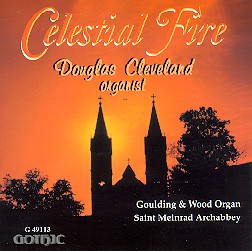
  2. “Celestial Fire” Douglas Cleveland, organ; Gothic 49113.
  3. “The English Anthem, volume 3”, The Choir of St. Paul’s Cathedral, Andrew Lucas, organ, John Scott directing, Hyperion 66618.
  4. “Millennium”, Westminster Abbey Choir, Martin Neary directing, Sony 66614
  5. “A Song of Trust”, George Bartle, solo treble, Choir of Ely Cathedral, Herald HAVPCD 159


Listen Online:

KING-FM Seattle's Classical Choice — Sundays at 10:00 PM

OREGON: KWAX-FM and the University of Oregon radio network — Sundays at 8:00 AM and 6:00 PM

Wednesday, May 19, 2010

Pentecost Special!

Since Sunday is Pentecost, we thought we would feature a couple of appropriate Pentecost albums, and let you know that we are having a special when you buy both of them together!

Celestial Fire
Goulding and Wood organ
Saint Meinrad Archabbey, Indiana
Douglas Cleveland, organ


Taken from the text of Veni, Creator Spiritus, "Celestial Fire" explores mostly new music, some with Pentecost themes. The 70-rank Goulding and Wood organ is Romantically inclined, and projects into a room with six seconds of reverberation. Douglas Clevelands artistry and imaginative programming, make this unusual recording worth hearing!

Larsen: Veni, Creator Spiritus
Locklair: Windows of Comfort
Decker: Kairos
Langlais: Triptyque
Melody
Trio
Final

Duruflé: Prelude, Adagio & Choral on Veni Creator, Op. 4


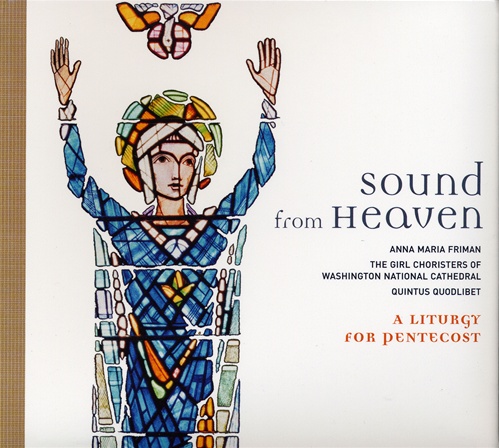
Sound from Heaven
A Liturgy for Pentecost
Anna Maria Friman, soprano
The Girl Choristers of Washington National Cathedral, James Litton, director
Quintus Quodlibet, Geoffrey Williams, director
Erik Wm. Suter, organist
Edward M. Nassor, carillonneur


This recording brings together a splendid tapestry of music from the Franco-Belgian tradition, including traditional Gregorian chant, monody from the Notre Dame Conductus which flourished in Paris circa 1200, and the medieval "Messe de Tournai." This music is paired with the excerpts from the Pentecost Mass for organ by Olivier Messiaen, the 20th century Roman Catholic mystic; also Messiaen's choral motet, "O Sacrum Convivium," and music from the Cathedral's 53-bell carillon.

Save $12.98 When You Buy Both of These Together!

Monday, May 17, 2010

The Instruments Behind Haydn Sonatas

We have been giving you the in-depth details of Ulrika Davidsson's newest release "Haydn Sonatas" by telling you about Haydn while writing these works, the works themselves, and now today we wanted to share some fantastic information about the instruments that inspired it all!

THE INSTRUMENTS
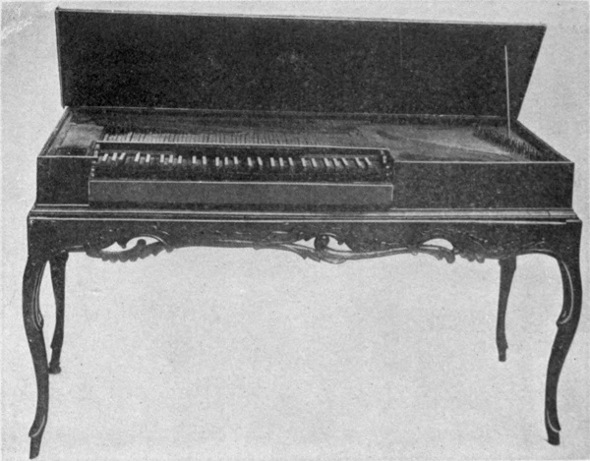
In the second half of the eighteenth century, the harpsichord, clavichord, and the Viennese fortepiano shared many characteristics, and well into the 1780s keyboard music was played interchangeably on all of them. Haydn’s earlier works were written for the harpsichord, the dominating keyboard performance instrument at the time. But they also lend themselves particularly well for execution on the expressive clavichord. If not for performance, Haydn most likely used the clavichord for practicing, teaching and composing. In general, fortepianos became widely available in the 1770s and 1780s, and at that time there was no clear-cut distinction between harpsichord and fortepiano music. In order to bring out the full expressive range and rhetorical content of Haydn’s music, on this recording the two dynamically most sensitive instruments, the clavichord and the fortepiano, have been used.

Instruments used in the recording

The fortepiano used here was built in 2004 by Monika May, Marburg, Germany. It is a modified copy of a Viennese piano by Anton Walter, ca 1785, which is in the possession of the builder. Range: FF-g’’’. It has three knee levers, one for the moderator, one for raising the dampers completely, and one for raising the damper rail on the treble side, so that the upper register is undamped, the middle is successively more damped, and the bass is completely damped. This enables the player to vary the resonance in the instrument and support the upper register with more sustained sound even when the overall desired effect is one of clarity.

The Walter type instrument has a wide expressive range. It has great clarity, quick speech, and efficient damping suitable for the earlier sonatas. The touch is almost as sensitive as that on the clavichord. For the later classical and early romantic repertoire it provides a strong, full sound with great resonance; there are three strings per note above a’.

The clavichord used here is one of the manuals from a large two-manual and pedal harpsichord, built in 2001 by Joel Speerstra and Per-Anders Terning at the Göteborg Organ Art Center workshop for the Eastman School of Music. It is a copy of an instrument from 1766 built by Johan David Gerstenberg, located at the Museum of Musical Instruments at the University of Leipzig. Manual range: CC-e’’’.

(the above photograph features a clavichord)